

Previous entries — Part One, Introduction; Part Two, Electoral Politics; Part Three, Labor
As we learn from the successful organizing of the SPA, we must also acknowledge the SPA’s greatest failure. At the same time reactionary tendencies dominated the AFL, bigotry also had a far too common place in the socialist movement. Many prominent SPA members held racist and misogynistic viewpoints, and the membership of the organization (predominantly white and male) reflected this. While it is accurate that socialist politicians and the party’s position tended to be more emancipatory than other political organizations of the time, the lack of a strong anti-racist and feminist culture significantly weakened it.
While many women did join the party and played crucial roles as socialist organizers, the organization never reached anywhere near gender parity, with few women in leadership positions. This occurred despite an effort by the party to take a role in the movement for women’s rights. In 1908, the SPA endorsed the women’s suffrage movement and hired a full-time staffer dedicated to the cause. Ruthenberg himself once argued that there was “no more important cause” than bringing women into the party. But the demographic imbalance persisted. This situation was described by Cleveland local member Nellie Zell in her article “The Lone Woman in the Local”:
“The first thing that greets her is that same capitalist mind of these Socialist men who have invited her to come. . . . Indeed, it is a very embarrassing position for both men and women. They want her there, yet now that she is there, they don’t know what to do with her. To make the matter worse, they talk about things of which she has no knowledge, and to smoke or not to smoke is the burden on their minds, while she is wondering whether she had better talk or preserve that lady-like silence so much admired by members of the old parties… I wonder if you men fully realize what that word ‘Comrade’ means to us women?”
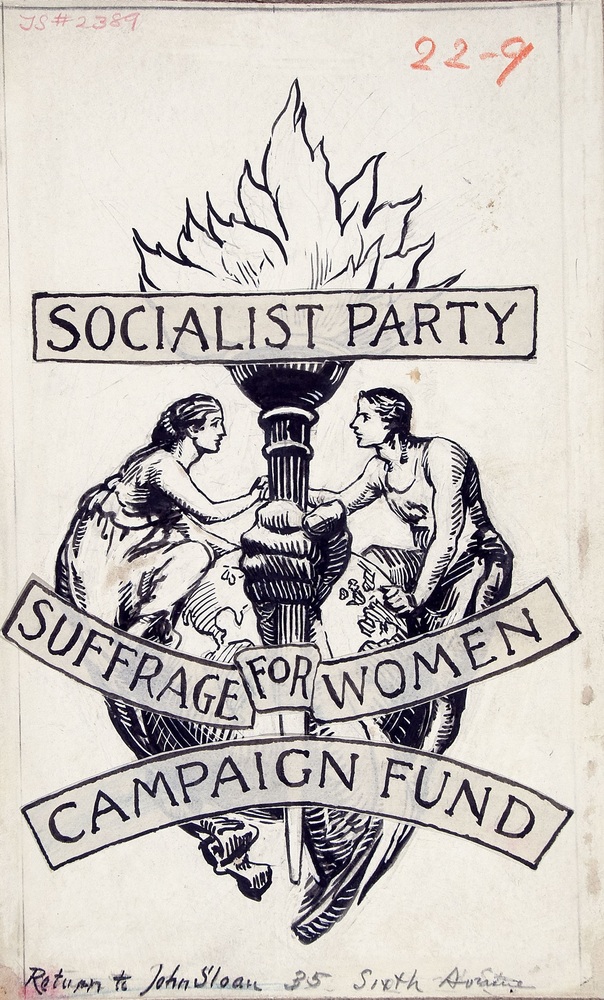
Put simply, the party was failing to present a comradely attitude towards women who were interested in socialism. Within a broader US social culture that discouraged women from being active and vocal politically, this resulted in a failure to recruit significant numbers of women into the SPA.
The SPA did not embrace anti-racism in the 1910s in the same way it did the suffrage movement. Many locals in the South operated under segregation, and several prominent socialist leaders were open white supremacists. The Ohio Socialist Party adopted a position in 1911 of encouraging the recruitment of Black members, but there was a failure to explicitly condemn racial oppression, rather than just class oppression of Black workers. This changed over time, as discussed in Eric Blanc’s article which focuses primarily on SPA congressman Victor Berger’s shift from holding openly racist views to being praised by the NAACP. However, this tolerance of racism was an incredibly significant failure of the organization for the duration of the 1910s, when it was most politically relevant.
On the other hand, we can take some positive examples from the SPA’s national and linguistic diversity. Cleveland was a cosmopolitan city, and the Cleveland local represented this well, including German, Bohemian, Polish, Jewish, Finnish, Hungarian, Lettish, Lithuanian, Slovak and Italian branches.. Nationally, there were similar language-based federations, with both posing an interesting question of internal governance. These groups represented a significant portion of party membership on paper, but in practice operated very autonomously. Some SPA members, like Ruthenberg, advocated for more centralization of the language federations, bringing them closer in line with the organizing of the party as a whole. Others advocated for the autonomous model as an effective way to organize immigrant communities. Ultimately, it is clear that the party’s diversity among European immigrant groups was a strength enabled through providing spaces for socialists of the same identity to coordinate. With the language federation’s tendency to effectively act as internal factions, Ruthenberg’s push towards centralization is understandable, although such practices should be accompanied with a clear understanding that solidarity, not assimilation, is the answer to xenophobic attitudes.
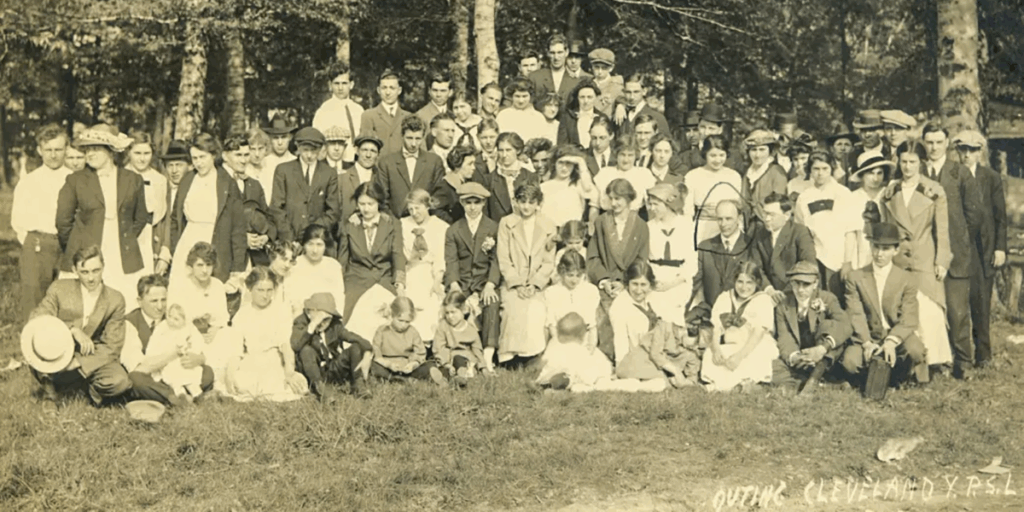
In many regards, DSA has come a long way from the open displays of bigotry and predominantly white male membership of the SPA. However, there is still much to be learned from their failure to stand with the oppressed – which is both a moral disgrace and a political weakness. With a membership and mass reach beyond DSA’s today, one can imagine how much stronger the SPA would have been had it built a membership that represented the broader working class. To avoid replicating this, DSA members should heed comrade Zell’s words. Even with the SPA supporting women’s suffrage, it did not create an environment conducive for women to organize. It is easy for a chapter’s demographics to self-perpetuate, as new members do not feel welcome in a space that does not look like them or their communities. In order to change this, we need consistent and proactive effort throughout all organizing projects, and structured ways for marginalized comrades to coordinate. To do otherwise will only serve to cement Cleveland DSA’s current place – as a predominantly white organization in a multiracial city.
Please return tomorrow for Part Five: Conclusion: The SPA’s Rise and Fall