Author: Serge S.
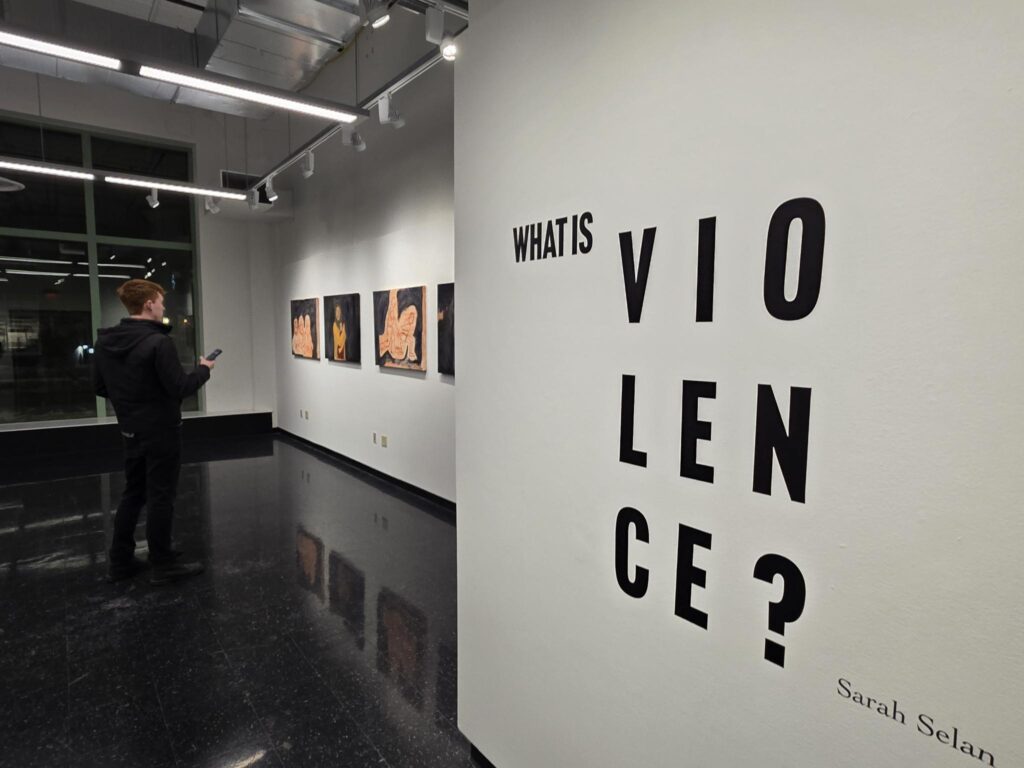
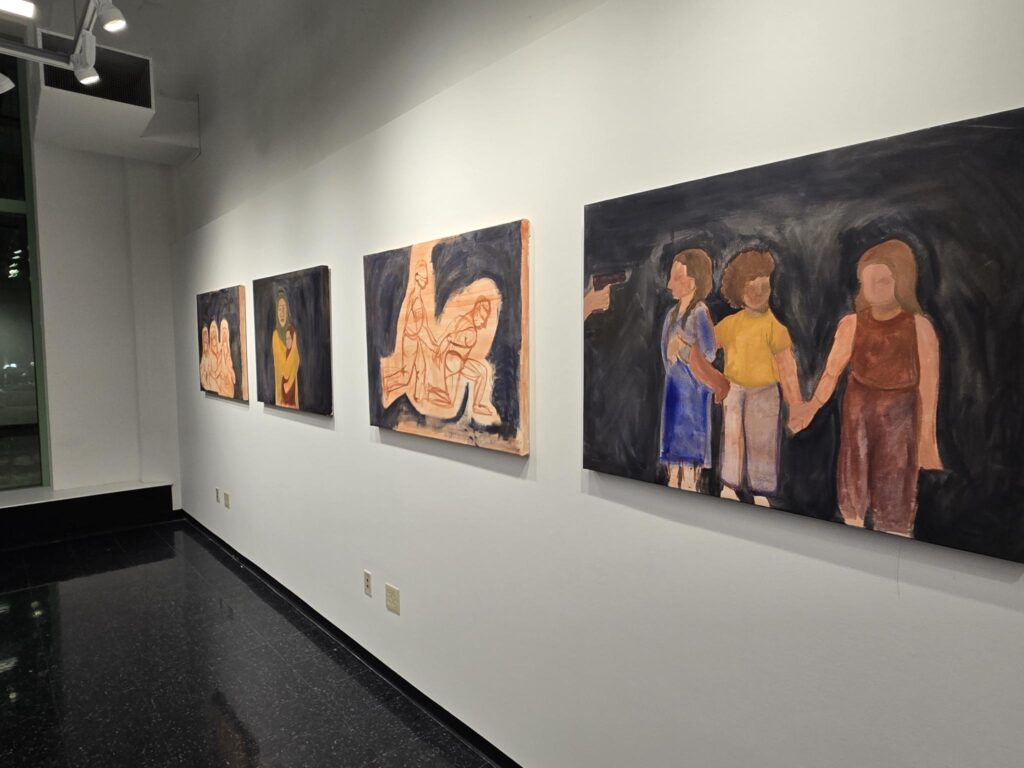
Artwork can carry many meanings. Sarah Selan, the artist behind the recent Cleveland Institute of Art (CIA) exhibition What is Violence?, hopes that people can see the deeper meaning underneath the surface of her paintings and take action to end the genocide in Palestine.
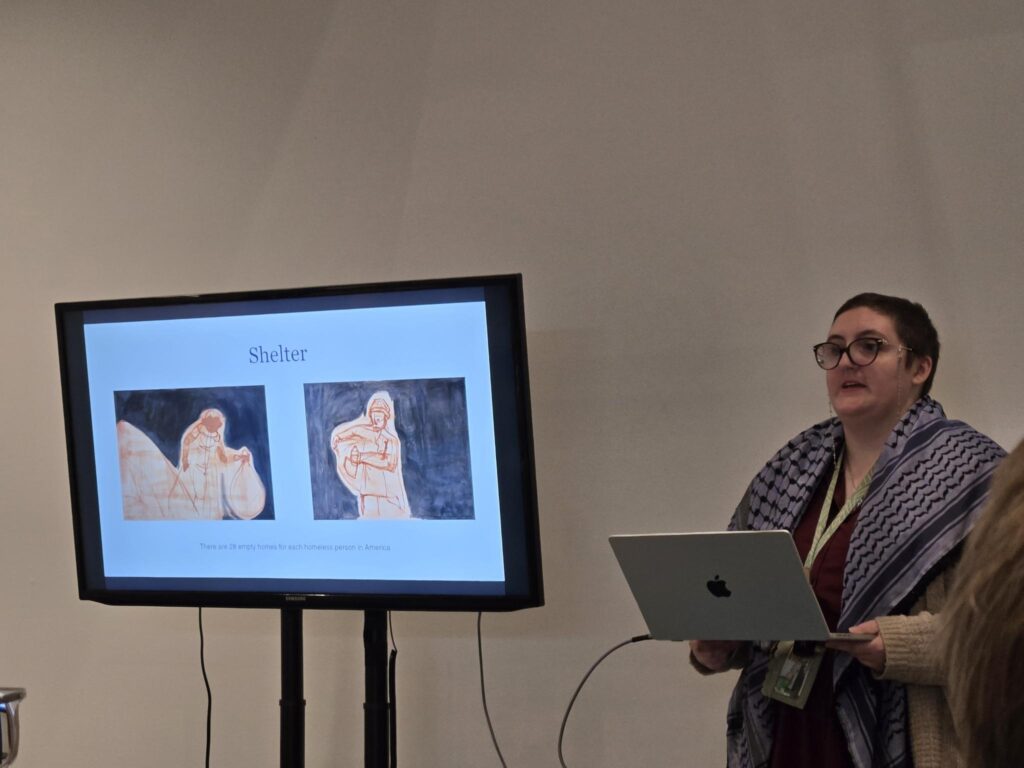
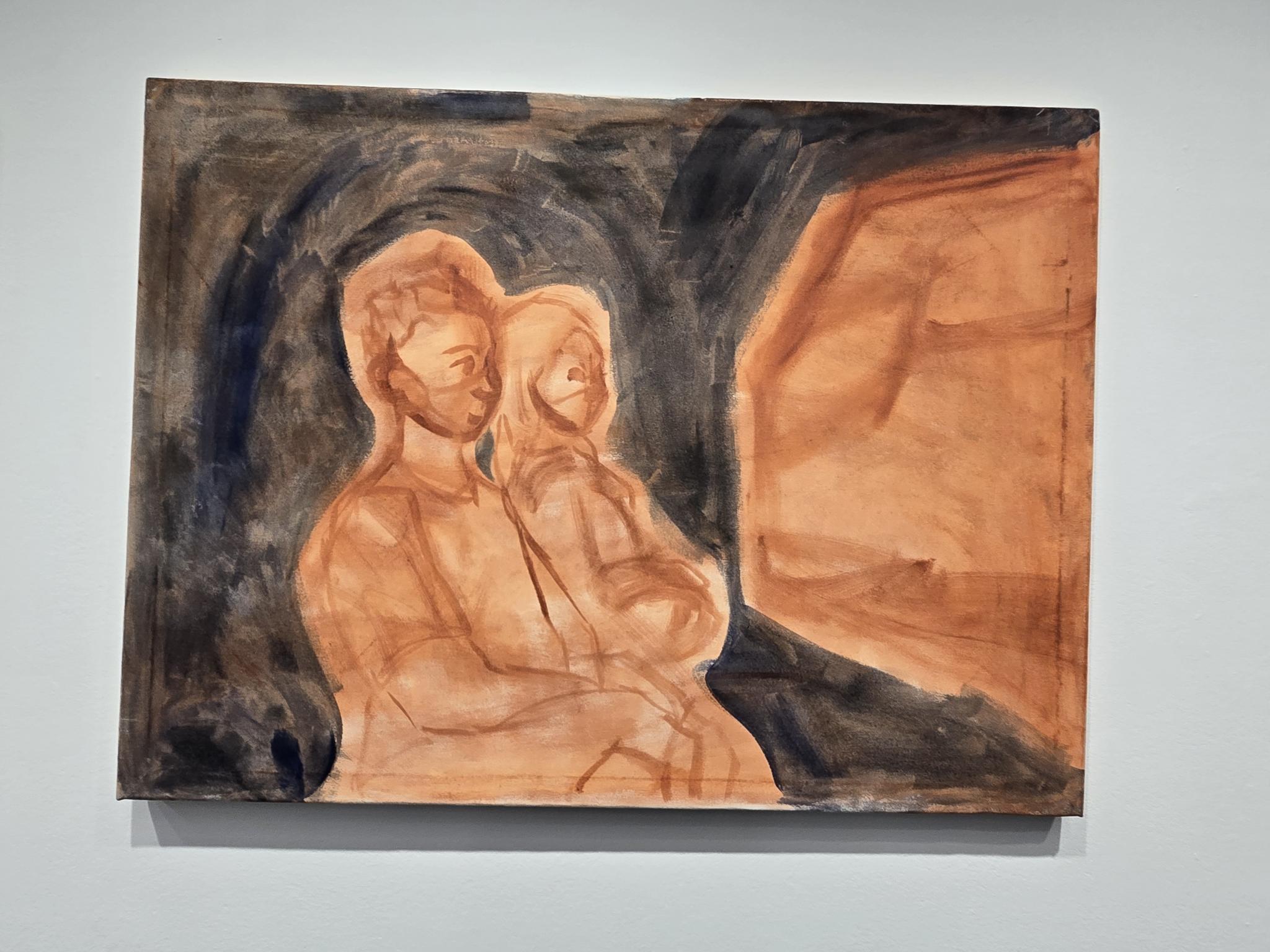
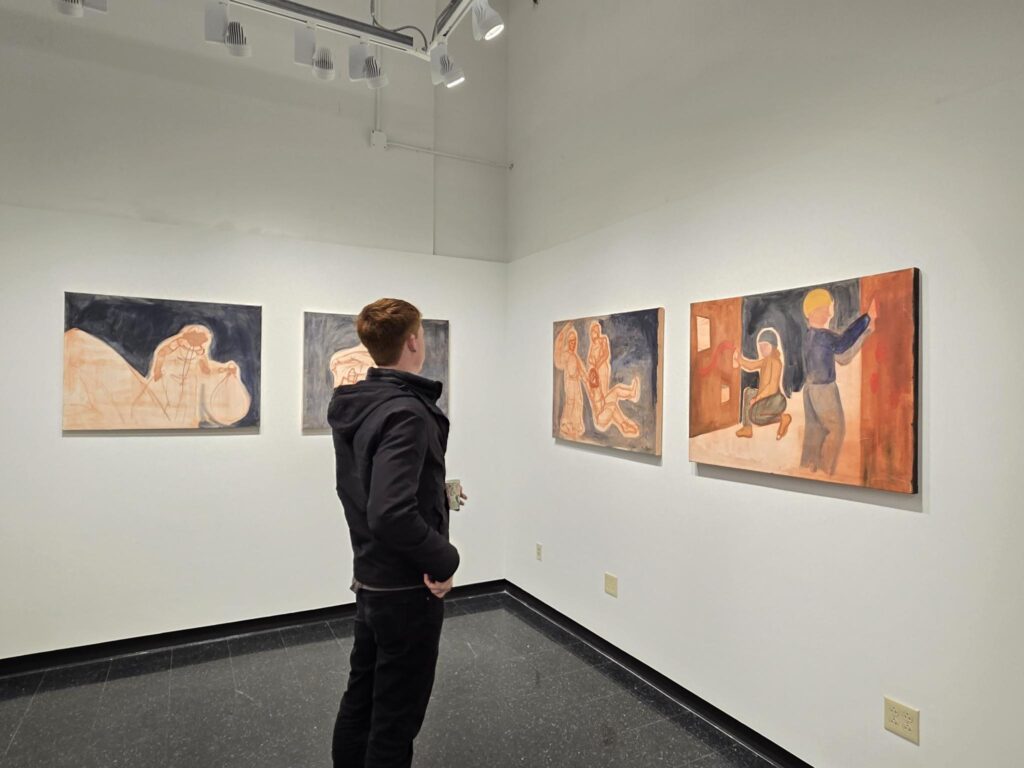
Her paintings consist of saturated dark backgrounds, figures of civilians forming protective barriers against ICE, interference with weapon manufacturers and other actions that highlight state hypocrisy when it labels direct action and peaceful resistance as “violence”.
Selan has personally tasted the arbitrary nature of the government when she was charged, along with ten others, for her alleged involvement in a Nov. 2024 protest. According to the allegations, several buildings and landmarks at Case Western Reserve University (CWRU) were smeared with red paint, including a statue of retired chemistry teacher “Doc Oc.”
The action, which the school claims caused $400,000 in damages, was in response to the CWRU and CIA’s continued work with institutions in the genocidal state of Israel. Students have long demanded the university cut ties with the country.
As part of her punishment, Selan was ordered by The Cleveland Institute of Art to show what they categorized as “better” ways of protesting. She did, but she did it in her own style.
“To be frank, the assignment from the school felt a bit condescending,” Selan responded in a written interview. “I was told that I was fighting a good fight, but the way I was fighting is not acceptable. My instructions were to introduce ‘better’ protest ideas from people I do not believe want us to win in the first place. I wanted to use this opportunity to display the difference between peaceful protest and non-disruptive protest. The vandalism was a peaceful protest. Nobody got hurt or was threatened with violence.”
“That being said, it was a disruptive protest,” she added. “People who equate disruption with violence fail to realize that a protest without disruption gives no reason for demands to be met, and no reason for anyone to pay attention to what you are fighting for.”
The paintings remain unfinished. The reason why, Selan said, was to emphasize that the fight for liberation is never over, but also a way to honor the memory of those artists murdered in Palestine by Israel.
“The first is that the revolution is never really over. The fight for global liberation is never really over,” Selan wrote. “We have miles to travel against our oppressors as we work to gain the freedom of ourselves and our neighbors. I wanted to portray that these acts against us are in progress, as are our acts of resistance against them.”
“The second reason was that I often found myself emotionally stuck,” she added. “What right do I have to make art when I should be out fighting? What lottery have I won to find myself in a situation where my punishment for disruption is art while others face death?”
“It was difficult to get the work done in time because I did not deserve the opportunity to make it in the first place,” she concluded. “The greatest artists have been killed by Israel during the genocide. The most creative minds sit in jails and prisons in the United States due to situations outside of their control. To me it serves as a reminder that the best art has never been made because we killed the beautiful people who would have made it.”
Selan said that the school’s reaction to the protest shows the institute’s true stances on human rights, and she hopes that students continue to call for divestment.
“I have no doubt that a day will come in the future where both institutions will boast that their students contributed to an encampment to end the genocide of the Palestinian people,” Selan wrote. “They will use it to draw in future applicants to come be a part of a historic campus with deep roots in liberation.
“They punished the brightest minds their schools have ever seen to promote their beliefs of hatred and bigotry. They work with groups that exterminate an entire group of people just to line their pockets. I condemn their hypocrisy and hope that as students continue to push for divestment, we will transform these institutions into respectful academic organizations that inspire calls for global liberation, instead of suppressing them.”
Selan said that being an organizer as a student comes with its own limitations. When people graduate, movements slow down, and future participants can lose the memory of what worked and what didn’t in previous encampments.
She added that student organizing can only go so far, and for real progress to be made, the skills and experience developed among the encampments need to be put back into the community.
“Student protesters have always been some of the most powerful voices in the activist community,” Selan wrote. “From anti-war movements to civil rights, our students are strong. That being said, we can not put the weight of the revolution on their back.
“I am proud of the students who were able to achieve divestment through their encampments, but that cannot always be the case. There is a lot of pressure to change campuses that have been rooted in imperialism and oppression for decades, but most students will only be around for 4 years. These movements can take decades to achieve change and that can be an overwhelming thought to a lot of young people.”
“Do not take this to mean that campus-based issues aren’t worth fighting for,” she continued. “But rather as a reminder that even if you do not achieve what you hope to in your time at an academic institution, you are making progress towards personal growth and a strong community.”
When asked for her final thoughts, Selan said that her future will be rooted in activism, and in a way, she can thank the state for that.
“The vandalism and my alleged involvement changed my life,” Selan wrote. “I was thrown in jail, received death threats, and was forced to pay for damages that were obviously inflated. Despite all this, I have grown as an organizer and will hold these experiences with me forever. They will inspire not only my art, but everything I do in my life. I am grateful for my journey, and I am right where I want to be.”